Document
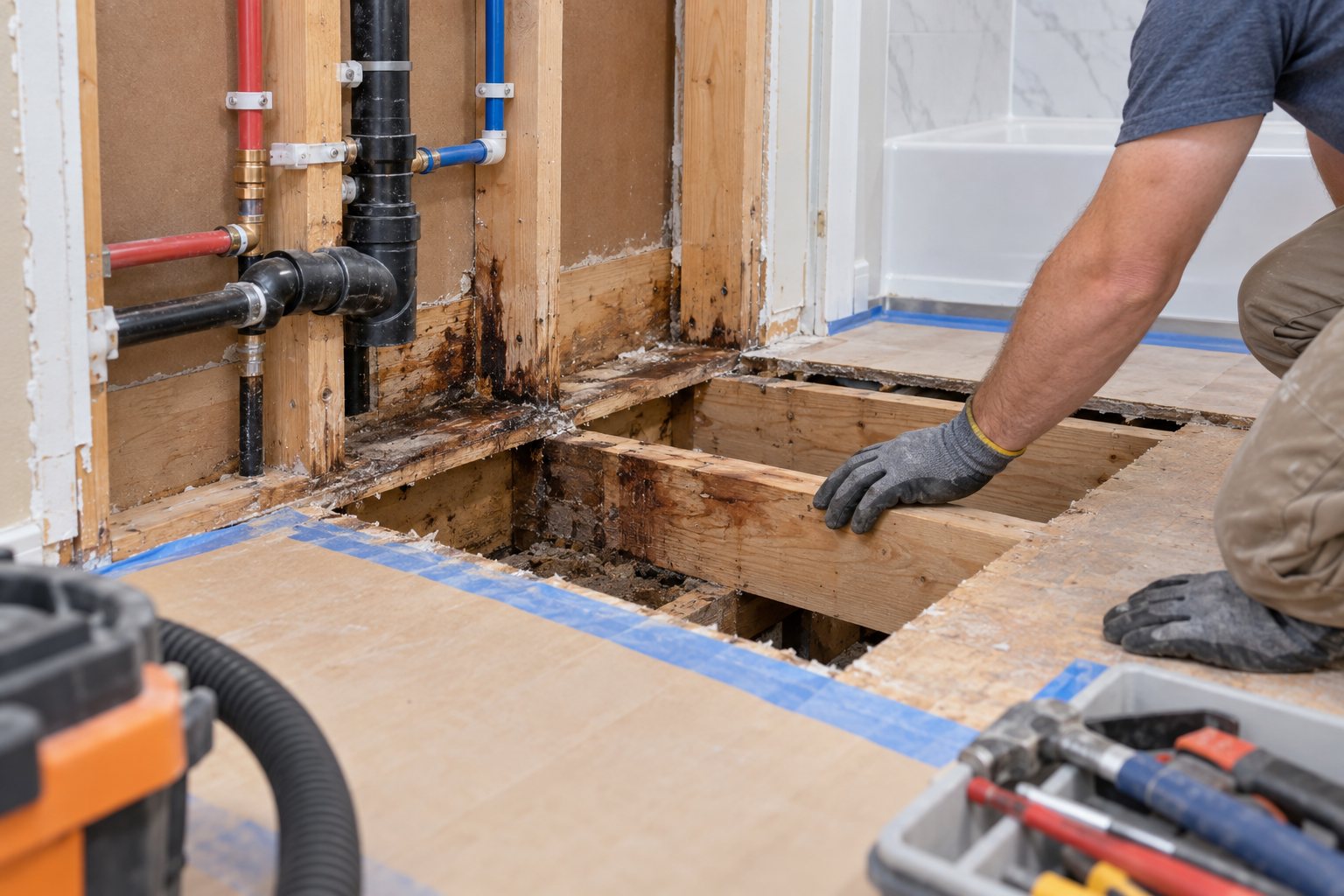
Photograph and locate the condition before more removal or covering. Use wide and close views with room and date record.

Prepared, documented, calm
Hidden-condition work should show that the team is prepared—not eager to frighten people. State what is observable, trace the likely water source, pause when needed, define the correction, obtain written approval, and verify before covering.
Photograph and locate the condition before more removal or covering. Use wide and close views with room and date record.
Pause when a finding changes safety, containment, occupancy, drying, or work planning.
Separate supply, drain, overflow, shower, toilet, exterior, condensation, and ventilation causes.
Name removal, drying, cleaning, plumbing, framing, subfloor, or specialist responsibility.
Explain cost, time, warranty, alternatives, and obtain a signed change order before extra work.
Confirm sound, dry, supported conditions and preserve moisture records, open-work photographs, and tests.
Problems deserve different tests
Control moisture, identify visible material, assess porous items, improve ventilation, and escalate when the condition exceeds ordinary cleaning or contractor scope.
Check valves, shutoffs, supply, drain, overflow, trap, vent, access, alignment, and targeted leak tests.
Inspect the finish, underlayment, subfloor, toilet flange, framing, tub or base support, moisture, level, and structural need.
Separate drain, supply, overflow, toilet, seam, splash, and condensation sources one at a time.
Look for movement, joint design, surface preparation, product compatibility, cure time, cleaning, and water exposure.
Check fan capacity, duct route, exterior termination, control, makeup-air path, cleaning, and operation.
Questions homeowners ask
No. A photograph can document visible conditions but should not be used to declare “toxic mold,” a health effect, or a remediation scope.
No. The moisture source, affected materials, drying, ventilation, support, and cleaning or specialist work must be addressed.
Coverage depends on the policy, cause, timing, documentation, exclusions, and insurer decision. A contractor should document the work but not promise coverage.