
Design around real daily movement
Safer Bathrooms for Aging and Limited Mobility
The consultation should follow the person’s real routine: approaching the room, entering, turning, sitting, standing, reaching controls, washing, toileting, drying, leaving, and receiving help. A feature is useful only when it is in the right place for that person.
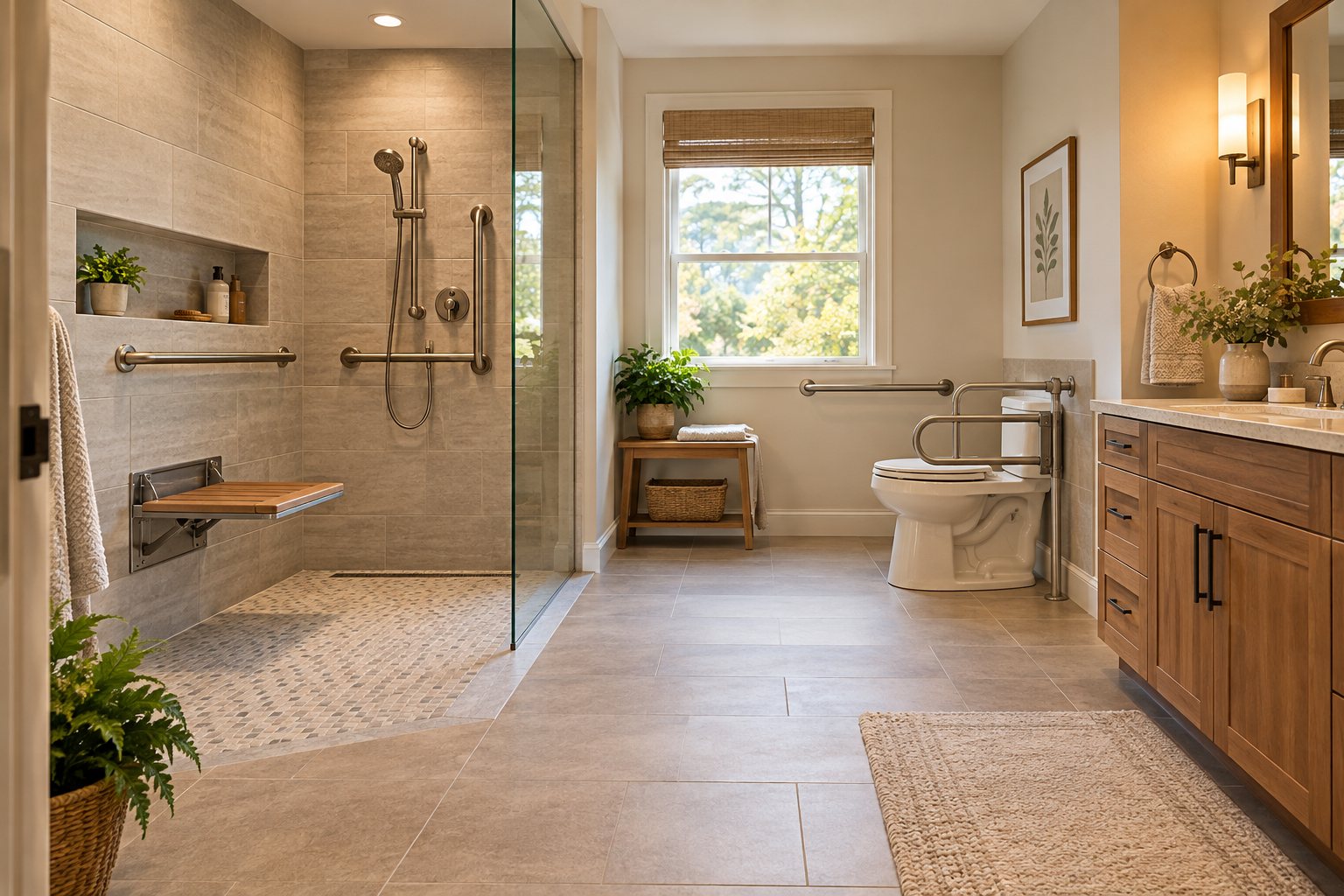
Five planning paths
- Grab bars and correctly supported seating.
- Low-threshold or curbless shower with room-wide water control.
- Walk-in tub when transfer, fill, drain, hot-water, and exit routine fit.
- Toilet support, reachable storage, brighter light, and safer night use.
- Door, mobility-aid, caregiver, and emergency clearance.
Feature-by-feature
| Feature | What it may support | Installation checkpoint |
|---|---|---|
| Grab bars | Support near the toilet and inside or outside bathing space. | Documented backing, listed fasteners, load rating, reach, and clear grip. |
| Seats and chairs | Sitting, transfer, rest, or caregiver-assisted bathing. | User size, transfer side, height, depth, support, stability, drainage, and clearance. |
| Low-entry shower | Reduced step-over, flexible seat and hand-shower use. | Slope, drain, splash control, transitions, structure, and room-wide water management. |
| Walk-in tub | Seated bathing for a routine and transfer that fit the model. | Door swing, fill and drain while seated, hot water, seal, power, service, and emergency exit. |
| Controls and light | Reach, understanding, temperature control, visible edges, and night use. | Location from sitting and standing, glare, shadows, wet rating, switch reach, and backup routine. |
| Door and toilet | Mobility-aid, caregiver, emergency, sitting, standing, and hygiene clearance. | Width, swing, lock release, blocked-door risk, fixture support, and communication access. |
Questions worth answering in the room
- Where has a fall or near-fall happened in the routine?
- Does the person bathe standing, seated, or with help—and might that change?
- Which leg leads and which hand seeks support?
- Can controls be reached without twisting, leaning, or standing?
- Can a walker, chair, cane, caregiver, or emergency helper move through the room?
- Can the toilet, vanity, storage, switches, outlets, and door be used without creating a new problem?
When transfer, seating, support, cognition, or caregiver arrangement is uncertain, include an occupational therapist, physical therapist, qualified accessibility professional, or the person’s health care team.
National context, used carefully
Bathroom design is one part of fall prevention.
CDC reports that more than one in four Americans age 65 and older falls each year. Health, medication, vision, strength, balance, blood pressure, footwear, and cognition also matter. No bathroom can promise that a person will not fall.
CDC Older Adult Fall Prevention · National Institute on Aging · MedlinePlus bathroom safety
Questions homeowners ask
Clear answers before you sign
Are grab bars enough?
No. Backing, placement, height, reach, grip, transfer direction, seating, controls, floor conditions, lighting, toileting, and caregiver or emergency access all matter.
Is a low-threshold shower the same as a curbless accessible shower?
No. “Low threshold” only describes a reduced step-over. Curbless design also depends on slope, drain, room transitions, water management, clear space, controls, and the user’s needs.
Is a walk-in tub always safer?
No. The user normally enters before filling and stays seated while it drains. Transfer, door direction, threshold, hot water, time, controls, service access, and emergency exit must fit the person.